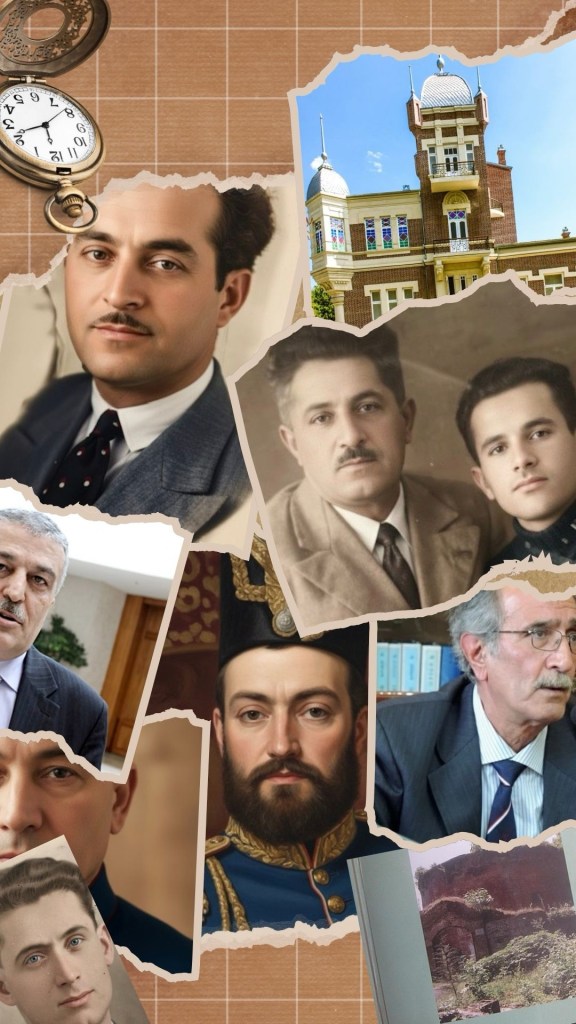
The Talysh people, an Iranian ethnic group indigenous to the southwestern Caspian Sea region, have navigated centuries of profound political transformation, cultural suppression, and resilient survival. From their position as supporters of the Safavid dynasty in the 16th century to their present-day struggle for cultural preservation in modern Azerbaijan and Iran, the Talysh experience illuminates the complex dynamics of minority identity within shifting imperial and national boundaries.
The Safavid Period: Integration and Autonomy (1501-1736)
During the Safavid era, the Talysh region—encompassing present-day southeastern Azerbaijan and parts of northern Iran—held strategic importance as a governorate of the Iranian empire. The relationship between the Talysh and Safavid rulers was deeply interconnected through both kinship and political alliance. Talish traditionally maintained associations with Gilan and Mughan, particularly with Ardabil, which shared similar linguistic and ethnic bonds with the Talysh region before the Turkicization of Iranian Azerbaijan.
The early Safavid dynasty benefited significantly from Talysh support. Two of the four Sufi teachers of Shah Ismail I (r. 1501-1524), founder of the Safavid dynasty, carried the epithet “Talishi”. At the end of the 15th century, many Talysh leaders provided crucial support to the Safavids, who rewarded them with honors and land. The Talysh were among the first supporters of the Safavid movement, receiving the governorship of Astara, which served as the capital of the Talish district and the seat of the hakem (governor) of Talish. From 1539 onwards, the governorship of Astara was held hereditarily by the family of Bayandor Khan Talesh.
The Safavid administration attempted to control local Talysh chiefs by subordinating them to obedient officials, yet despite these centralization efforts, the Safavid state was unable to terminate local autonomy in the South Caucasus. The population of Safavid Talish comprised a mixture of Iranian and Talysh elements. Local rulers operated as officials whose ranks were acknowledged by royal farman (edicts), which in reality represented acceptance of their local autonomy. This system allowed familial succession of chiefs to give rise to dynasties that dominated local affairs and sought to consolidate influence whenever the central government weakened.
The Talysh Khanate: Emergence and Independence (1747-1828)
The assassination of Nader Shah in 1747 created a power vacuum that enabled the emergence of independent khanates throughout the Caucasus. Jamal al-Din, son of Mir-Abbas Beg (also known as Seyyid Abbas), established the Talysh Khanate with Lankaran as its capital, marking the beginning of semi-independent Talysh rule. According to some accounts, the founder Seyyid Abbas and his ancestors were members of the Safavid dynasty who had moved into the Talish region during the turbulent 1720s.
Jamal al-Din, who earned the nickname “Gara Khan” (the Black King) due to his dark complexion, had risen to important posts in Nader Shah’s army and was assigned to suppress uprisings in southern Talish. Upon establishing the khanate, he maintained his father’s correspondence with Russia, pledging allegiance to Empress Catherine II and offering Russian troops access to his domains. This diplomatic maneuvering would characterize Talysh relations with regional powers for decades.
The Talysh Khanate existed as a type of administrative unit governed by a hereditary ruler subject to Iranian authority. The title of the ruler was either beglarbegi or khan, equivalent to the Ottoman rank of pasha. Even when shahs in mainland Iran lacked power to enforce their rule, the khanates were still considered Iranian dependencies. The khanate underwent significant territorial changes, particularly during the Russo-Persian Wars, when districts including Asalem, Karganrud, and Vilkij were transferred between Iranian and Russian control.
During the reign of Karim Khan Zand (r. 1751-1779), Jamal al-Din faced imprisonment in Shiraz after the Zand ruler learned of his Russian correspondence. However, he was subsequently reinstated and given the title of khan, enabling him to conquer numerous towns in Talish and gain control over most of the region. In 1784, the khanate was attacked by Fath Ali Khan of Quba, the most dominant khan in the Caucasus, who made Jamal al-Din his vassal. Following Jamal al-Din’s death in 1786, his son Mir-Mostafa Khan succeeded him and ruled more autonomously after Fath Ali Khan’s death in 1789.
Russian Conquest and the Treaties of Partition (1795-1828)
The rise of the Qajar dynasty under Agha Mohammad Khan Qajar fundamentally altered the political landscape of the Caucasus. In 1795, Qajar forces attacked Talish, though they did not succeed in fully subjugating it. Mir-Mostafa Khan, along with other regional khans, entered into correspondence with Russia, seeking protection against Iranian forces. This appeal for Russian assistance marked a turning point in Talysh history.
The First Russo-Persian War (1804-1813) concluded with the Treaty of Gulistan, signed on October 12, 1813, in the village of Gulistan in Karabakh. This treaty forced defeated Qajar Iran to cede many formerly independent khanates to Russia, including parts of the Talysh Khanate. Article III of the treaty stipulated that the Shah of Iran recognized Russian control over several territories, including the Talysh Khanate. After a brief siege led by Pyotr Kotlyarevsky on January 1, 1813, Russian troops captured the citadel of Lankaran from Persian forces, a strategic victory that led directly to the treaty.
However, the Treaty of Gulistan failed to resolve all contradictions between Russia and Iran. Persia refused to accept the loss of Transcaucasia and, supported by Great Britain, demanded return to the borders of 1801. The Second Russo-Persian War (1826-1828) erupted as Iran attempted to reassert its hegemony and revert the terms of the Gulistan treaty. In 1826, Persian forces managed to regain lost territories, including the Talysh Khanate, but after numerous defeats in 1827, the war ended with the humiliating Treaty of Turkmenchay.
The Treaty of Turkmenchay, signed on February 22, 1828, permanently divided the Talysh lands between the Russian Empire and Qajar Iran. The treaty made Iran cede control of several areas in the South Caucasus to Russia, including the Erivan Khanate, the Nakhchivan Khanate, and the remainder of the Talysh Khanate. The boundary between Russia and Iran was set at the Aras River. These territories now constitute Armenia, southern Azerbaijan, and parts of Turkey’s Iğdır Province. The northern half of historical Talysh became part of the Russian Empire, while the southern portion remained within Qajar Iran.
Russian Imperial Rule: Assimilation and Migration (1828-1917)
Under Russian rule, the Talysh Khanate was initially allowed some autonomy. General Yermolov took over the khanates of eastern Transcaucasia one by one, deposing most khans—Shaki in 1819, Shirvan in 1820, and Qara-Bagh in 1822. However, Mir Hassan Khan of Talesh was permitted to retain autonomy, as Yermolov understood him and his family to be implacably hostile to Iran. Eventually, in 1841, the khanate was formally abolished, though descendants of the Talysh khans continued to rule the territory as part of the Russian Empire.
Russia pursued a policy to free its newly conquered lands from Iranian influence by helping create and spread a new Turkic identity based on secular principles, particularly shared language. As a result, many Iranian-speaking residents of what would become the Azerbaijan Republic either began hiding their Iranian ancestry or underwent progressive assimilation. During the 19th century, significant Talysh migration occurred toward the north of modern Azerbaijan in search of work in the oil industry and fisheries. This economic migration led to the establishment of Talysh-speaking settlements on the Absheron Peninsula, particularly in Baku, as well as a significant Talysh community in Sumgait.
The Soviet Era: Systematic Suppression (1920-1991)
The Soviet period brought both initial cultural recognition and subsequent systematic suppression of Talysh identity. In the early Soviet years, authorities bolstered Talysh identity by publishing school books and newspapers in the Talysh language. A newspaper called “Red Talysh” was established, Talysh high schools operated, and several Talysh language books were published. The Talysh region was economically important for the Soviet Union, supplying fruits, vegetables, tea, grains, and meat, while the military base in Lankaran near the Iranian border was among the largest in the Caucasus.
However, everything changed dramatically in 1937 when the mere mention of Iranian-speaking ethnicities in Azerbaijan became dangerous. Following a plenum that year, a decision was made to abandon teaching in minority languages and switch to Azerbaijani. By the end of the 1930s, schools teaching in the Talysh language were closed, periodicals were discontinued, and Talysh scientists and public figures—including Ahmedzade Z., Nasirli M., and Mirsalaev B.—were subjected to repression.
The Stalin-era deportations represented one of the darkest chapters in Talysh history. In 1938, as part of efforts to ethnically cleanse borderland areas, thousands of Talysh were deported from regions adjacent to Iran. People’s Commissar of Internal Affairs N. Yezhov ordered the immediate cleansing of Iranian districts, detaining those without proper documentation and deporting them with their families to Kazakhstan or other specially designated places within the USSR. On October 8, 1938, the Council of People’s Commissars of the USSR adopted Resolution No. 1084-269-ss “On the resettlement of Iranians (Talysh) from the border regions of the Azerbaijan SSR to the Kazakh SSR,” defining the legal and economic aspects of this deportation.
Many ethnic Talysh from the Astara, Lankaran, Lerik, and Yardimli regions were deported to the deserts of Kazakhstan, though their ethnicity was often not mentioned in official documents—they were classified as “Iranians” or “Talysh”. From 1939 to 1953, additional deportations occurred to ensure security of the 800-meter zone near the Iranian border, with residents of villages including Tezekend, Sibroni, Alili, and Abily forcibly relocated to other regions of Azerbaijan.
The manipulation of census data became a primary tool of cultural erasure. The 1939 census stated that Talysh people constituted the fifth largest national community in Azerbaijan SSR with 87,510 people. However, the 1959 census claimed the Talysh population had decreased to merely 85 individuals. The official explanation was that “Talyshes voluntarily and en masse self-identified as Azeri to census workers”. Documentary evidence uncovered by historian Krista Goff reveals that the Central Statistical Administration in Moscow had planned to include a Talysh nationality category in the 1959 census, but this category was excluded during data collection and reporting in Azerbaijan itself.
From 1960 to 1989, Talysh were not included in censuses as a separate ethnic group, being considered part of the Azerbaijanis. The leadership of the Azerbaijan SSR used manipulated census data to create a narrative about the “voluntary and complete assimilation” of the Talysh people, claiming it occurred “naturally over time rather than from artificial manipulations”. Soviet ethnographers emphasized common cultural features between Talysh and Azerbaijanis, presenting the “assimilation” of Iranian-speaking Talysh by Turkic-speaking Azerbaijanis as an “impressive achievement” of the Soviet state and “ethnohistorical progress”. The Great Soviet Encyclopedia declared that “in the USSR, the Talysh almost merged with the Azerbaijanis, who are very close in material and spiritual culture, and therefore were not identified in the 1970 census”.
This assimilation policy created enormous social, political, and economic pressure on the Talysh. They could not register as Talysh in official documents, and parents could not enroll their children in schools teaching in the Talysh language. Census workers avoided questions about nationality and native language, or simply recorded Talysh as “Azerbaijanis” regardless of their self-identification. Some Talysh accepted Azerbaijani identification to avoid discrimination when applying for jobs. Due to stigmatization, lack of schools and resources, and absence of benefits for being Talysh, many preferred Azerbaijani self-identification and feared their children would face discrimination for speaking Azerbaijani with a Talysh accent.
Only during the Glasnost era under Mikhail Gorbachev did Talysh ethnicity return to the census, with 21,169 Talysh immediately counted in 1989. This sudden reappearance after three decades of statistical erasure demonstrated the extent of Soviet manipulation of ethnic data.
The Talysh-Mughan Autonomous Republic (1993)
The dissolution of the Soviet Union in 1991 created opportunities for national self-determination but also revealed deep fissures in the newly independent Azerbaijan. The brief existence of the Talysh-Mughan Autonomous Republic in 1993 represented both the culmination of decades of suppressed aspirations and the fragility of minority autonomy movements in the post-Soviet space.
The autonomous republic was proclaimed amid profound political turmoil in Azerbaijan. In June 1993, a military rebellion against President Abulfaz Elchibey broke out under the leadership of Colonel Surat Huseynov. Colonel Alikram Hummatov (also spelled Humbatov), a close associate of Huseynov and leader of the Talysh nationalists, seized power in southeastern Azerbaijan and proclaimed the Talysh-Mughan Autonomous Republic in Lankaran. The republic envisaged consisting of seven administrative districts: Lankaran city, Lankaran district, Lerik, Astara, Masallı, Yardımlı, Jalilabad, and Bilasuvar.
Initially declared simply as the Talysh-Mughan Republic on June 21, 1993, the entity’s status shifted when Hummatov sought assistance from political scientist Fakhraddin Abaszoda (Abbaszadeh) to bring the republic in line with republican and international law. On August 7, 1993, more than 200 individuals—both Talysh and non-Talysh—gathered to vote on a Constitutional Law that effectively renamed the entity to the Talysh-Mughan Autonomous Republic and positioned it firmly within the confines of the Azerbaijani territorial state. This constitutional framework clarified that the autonomous republic was intended to be a constituent part of Azerbaijan rather than an independent state.
However, as political stability returned to Baku and Heydar Aliyev rose to power, the Talysh-Mughan Autonomous Republic—which failed to gain significant public support—was swiftly suppressed. According to Professor Bruce Parrott, “This adventure rapidly turned into farce. The Talysh character of the ‘republic’ was minimal, while the clear threat to Azerbaijani territorial integrity posed by its mere existence only discredited Gumbatov and, by association, Guseinov”. An estimated 10,000 protesters gathered outside Hummatov’s headquarters demanding his ouster. Heydar Aliyev made a televised speech on August 23, 1993, calling for locals to help overthrow Hummatov and his supporters. The republic collapsed shortly thereafter, having existed for only about two months.
Hummatov was arrested and initially received a death sentence, which was subsequently commuted to life imprisonment. Under pressure from the Council of Europe, he was pardoned and released from custody in 2004, with permission to immigrate to Europe after making a public promise not to engage in politics. However, Hummatov has continued his activism from exile, establishing the Talysh National Movement in the Netherlands in 2007.
Modern Azerbaijan: Continued Marginalization (1993-Present)
Since the suppression of the Talysh-Mughan Autonomous Republic, the Azerbaijani government has maintained strict control over Talysh cultural and political expression. The failed autonomy movement created lasting suspicion of Talysh nationalism within Azerbaijani state institutions. Historical repression of identity and the inability to practice their culture and language has led many Talysh to internalized self-repression. According to researcher Hema Kotecha, many Talysh fear being associated with separatism, Russia, or Armenia if they acknowledge their beliefs publicly, while fear of police and harassment by local authorities contributes to silence.
The 1999 census claimed only 76,800 Talysh lived in Azerbaijan, a figure widely disputed as an underrepresentation. The 2019 census recorded 87,600 Talysh (0.9% of the population), making them officially the second-largest minority after Lezgins. However, Talysh nationalists and independent researchers argue the true number is far higher. Unofficial estimates range from 200,000 to 600,000, with some scholars suggesting 250,000-260,000. According to Swedish scholar Svante E. Cornell, in private many Azerbaijanis acknowledge that the Talysh population is far higher than official figures.
The decline of the Talysh language represents a primary concern for activists and community leaders. In 2013, the United Nations classified Talysh as “vulnerable”. The language has been removed from schools and most newspapers. Many Talysh seek work in larger, non-Talysh-speaking cities where they can earn more money than by farming in their villages, but this economic migration accelerates language loss as Talysh becomes less professionally useful. Lowland communities that were once homogenous are becoming multi-ethnic, with Azerbaijani increasingly used. Among Talysh children, proficiency in their mother tongue is reportedly declining except in remote mountain villages.
The Azerbaijani government has been accused of implementing a policy of forceful integration of minorities, denying Talysh basic rights to education in their native language and cultural autonomy. Attempts to use the word “Talysh” in restaurant or market names have been forcibly changed. There is no television or radio station broadcasting in Talysh even for a few hours daily. A newspaper called Tolyshi Sado (Voice of the Talysh) operated but faced closure. In 2013, Armenia launched “The Voice of Talyshistan,” a radio station broadcasting in Talysh from Nagorno-Karabakh into southeastern Azerbaijan, which Azerbaijani officials criticized as a provocation meant to stir ethnic conflict.
Several prominent Talysh intellectuals and activists have faced arrest, imprisonment, and death under suspicious circumstances. Novruzali Mammadov, founder and editor of Tolyshi Sado newspaper and head of the Talysh Cultural Centre, was arrested in 2007 and charged with high treason and espionage. In June 2008, he was sentenced to 10 years in prison, with the court arguing he collected information for establishing administrative autonomy in Talysh-populated territories and damaged Azerbaijan’s image by appealing to international organizations about human rights violations. The charges included “propaganda of the Talysh language, culture and art,” appealing for a Talysh-language television program, and cooperating with linguists from the USA, Canada, Britain, and Germany on Talysh language research—purely scientific activities considered criminal offenses. Mammadov died in prison on August 17, 2009, under circumstances that remain disputed.
Fakhraddin Abaszoda (Abbaszadeh), chairman of the People’s Majlis of the Talysh-Mughan Autonomous Republic and a historian and political scientist, fled Azerbaijan in 1995 but returned in 2005. He published Talysh newspapers and dictionaries but was forced to flee again to Russia in 2008 due to harassment. In July 2018, he was detained by Russian authorities and extradited to Azerbaijan in February 2019 despite a pending asylum application. He was immediately arrested and charged with promoting anti-state activities and inciting ethnic discord. In February 2020, he was sentenced to 16 years in prison. Azerbaijani authorities claimed Abaszoda committed suicide in his prison cell on November 9, 2020, allegedly due to psychological shock from Azerbaijan’s military successes in the Second Nagorno-Karabakh War. Abaszoda became the second Talysh intellectual to die in Azerbaijani custody within a decade.
Hilal Mammadov, journalist and editor of Tolyshi Sado, was arrested in 2013 and similarly charged with treason and inciting ethnic hostility. Additional arrests of Talysh activists have continued, including the recent imprisonment of scholar Igbal Abilov in 2024-2025. In his handwritten appeal, Abilov argued that the Talysh language is being intentionally marginalized and pushed out of public life. He requested to speak in his native Talysh during court hearings and requested a translator, highlighting linguistic discrimination within the judicial system.
The Talysh National Movement, formally established in 2007 by exiled leaders in the Netherlands, advocates for the creation of a Talysh province with regional administration within Azerbaijan’s borders. The organization calls for political decentralization to promote equitable representation of minority groups and guarantee cultural and linguistic freedoms. In July 2018, activists formed a government-in-exile of the Talysh-Mughan Autonomous Republic. However, these efforts face accusations from Azerbaijani authorities of separatism and threats to territorial integrity.
Currently, the Talysh community in Azerbaijan faces poverty, unemployment, and lack of basic infrastructure such as electricity. Economic neglect of the southeastern regions has compounded cultural marginalization. Despite these challenges, the Talysh have maintained some cultural traditions, including folklore groups like the “Neneler” (Grandmothers) ensemble from Lankaran district, which performs Talysh and Azerbaijani folk songs and dances. The ensemble received recognition from National Leader Heydar Aliyev in 1997, though such officially sanctioned cultural expressions must carefully navigate political sensitivities.
The Talysh in Iran: Different Trajectories
The experience of Talysh in Iran has differed significantly from that in Azerbaijan. The southern Talysh population inhabits Gilan and Ardabil provinces, with the Talesh County in Gilan Province serving as a cultural center. Current population estimates for the Talysh in Iran range from 500,000 to 1,000,000, though precise figures remain unavailable. The Talysh language in Iran consists primarily of Central and Southern dialects, while Northern Talysh is spoken in both Iran and Azerbaijan.
Most Iranian Talysh are Sunni Muslims and adherents of the Naqshbandi order, contrasting with Azerbaijani Talysh who are predominantly Shi’ite (except in approximately twenty-four mountain villages). The Safavids’ campaign of Shi’ite proselytism in Talish remained incomplete due to the region’s mountainous, remote location. This religious distinction contributes to different communal experiences and identities.
Among Iranian Talysh, the search for Iranian forebears among South Caspian indigenous peoples represents an essential sign of their Iranianness. The Talysh mythology and folklore carry synthesis of natural cults, Zoroastrian elements reflected in the Avesta, and Islamic influences. Sacred groves and trees—particularly beech, oak, and platanus—hold special significance in Talysh spiritual traditions. These trees are decorated with fabrics and scarves, with candles lit at their base as people make wishes, reflecting pre-Islamic beliefs that have persisted alongside Islam.
While Iran has its own assimilationist policies toward minorities, the Talysh in Iran do not face the same systematic erasure experienced in Azerbaijan. Iranian Talysh can more openly maintain their language and cultural practices, though they still encounter limitations on minority rights. The Islamic Republic of Iran’s emphasis on Persian language and culture affects all non-Persian minorities, but the approach differs from Azerbaijan’s specific targeting of Iranian-speaking groups as potential separatist threats.
Cultural Heritage and Contemporary Challenges
Despite decades of suppression, the Talysh have maintained distinctive cultural traditions. Talysh folklore, music, and dance express themes of love, resilience, and reverence for the natural world. Traditional instruments like the tar, daf, tanbur, and dayereh (frame drum) provide rhythmic accompaniment for spirited performances. Talysh cuisine, influenced by fertile land and coastal proximity to the Caspian Sea, features dishes rich in herbs, fish, and rice.
The Talysh celebrate Nowruz (Persian New Year) and other seasonal festivals that showcase vibrant traditions. Traditional crafts, including intricate carpet weaving and delicate embroidery, represent tangible links to heritage, with patterns and designs symbolizing aspects of Talysh folklore and daily life. Women’s traditional clothing historically consisted of veils and long robes, though many Talysh women in Azerbaijan now wear Western-style clothing due to Russian influence.
Talysh mythology contains complex cosmogonic conceptions, including beliefs that the earth stands on the horns of a bull, which stands on a fish, with earthquakes occurring when the fish moves. Lightning and thunderstorms are associated with an old woman living in the sky who gallops across it on horseback when angry. During lunar eclipses, people historically knocked on copper dishes and fired guns to frighten away devils believed to be trapping the moon.
The Talysh people are renowned for their longevity and centenarianism. This remarkable characteristic has attracted scientific interest, though the socioeconomic factors contributing to Talysh longevity—including traditional diet, mountain environment, and lifestyle—have received insufficient study due to political sensitivities around acknowledging distinct Talysh identity.
Digital Revival and Future Prospects
In recent years, Talysh activists have increasingly turned to digital platforms for cultural preservation. Social media, online publications, and digital archives provide means to document language, share traditional knowledge, and connect diaspora communities. Community-led efforts to teach Talysh language, promote traditional music, and celebrate festivals are gaining momentum despite official obstacles. Scholars and artists use literature, radio programs, and digital media to revive pride in Talysh identity.
The Talysh National Academy, founded in 2010, engages in systematic study of Talysh folklore and mythology, publishing research in academic journals. Educational programs and language classes, though limited and often operating outside official channels, work to ensure younger generations maintain connections to their roots. These grassroots initiatives represent forms of cultural resistance and survival in the face of assimilationist pressures.
However, significant challenges remain. The Talysh language faces endangered status without official recognition and educational support. Economic underdevelopment of Talysh regions drives migration to urban centers where language and culture erode. Political repression prevents open discussion of Talysh identity and rights. The historical trauma of Soviet deportations, census manipulation, and contemporary imprisonments has created deep-seated fears within the community.
The international dimension further complicates the situation. Armenia’s support for Talysh cultural initiatives—including the radio station and academic programs at Yerevan State University—provides resources but also reinforces Azerbaijani suspicions of Talysh separatism connected to geopolitical rivals. Russia’s ambiguous role and periodic arrests of Talysh activists in Russian territory demonstrate the precarious position of exile communities. Iran’s potential influence over its co-ethnic population in Azerbaijan raises security concerns for the Azerbaijani government, contributing to harsh treatment of Talysh accused of Iranian connections.
Conclusion
The Talysh journey from Safavid supporters to modern marginalized minority illustrates the profound impact of imperial collapse, territorial partition, and nation-building on indigenous peoples. The treaties of Gulistan (1813) and Turkmenchay (1828) divided an ancient people between two states, setting in motion divergent historical trajectories. While Soviet-era policies systematically erased Talysh identity through deportation, census manipulation, and forced assimilation, the post-Soviet period has brought both new opportunities for cultural revival and continued repression.
The brief existence of the Talysh-Mughan Autonomous Republic in 1993 demonstrated both aspirations for self-determination and the limited political space for minority autonomy in Azerbaijan. Subsequent decades have seen intensified marginalization, with prominent intellectuals imprisoned or killed, language education suppressed, and official statistics minimizing Talysh presence. Yet the Talysh endure, maintaining cultural traditions, reviving linguistic heritage through digital means, and asserting their distinct identity despite overwhelming pressures to assimilate.
The Talysh experience raises fundamental questions about minority rights, cultural preservation, and national identity in post-Soviet states. Their struggle reflects broader tensions between centralizing nation-states and diverse populations with different linguistic, cultural, and historical backgrounds. As the Talysh continue navigating between Iranian and Turkic worlds, their resilience testifies to the enduring power of cultural identity and collective memory in the face of systematic erasure. The future of the Talysh people—whether they will successfully preserve their language and culture or gradually disappear into larger national identities—remains an open question with profound implications for understanding ethnicity, nation-building, and human rights in the 21st century.

